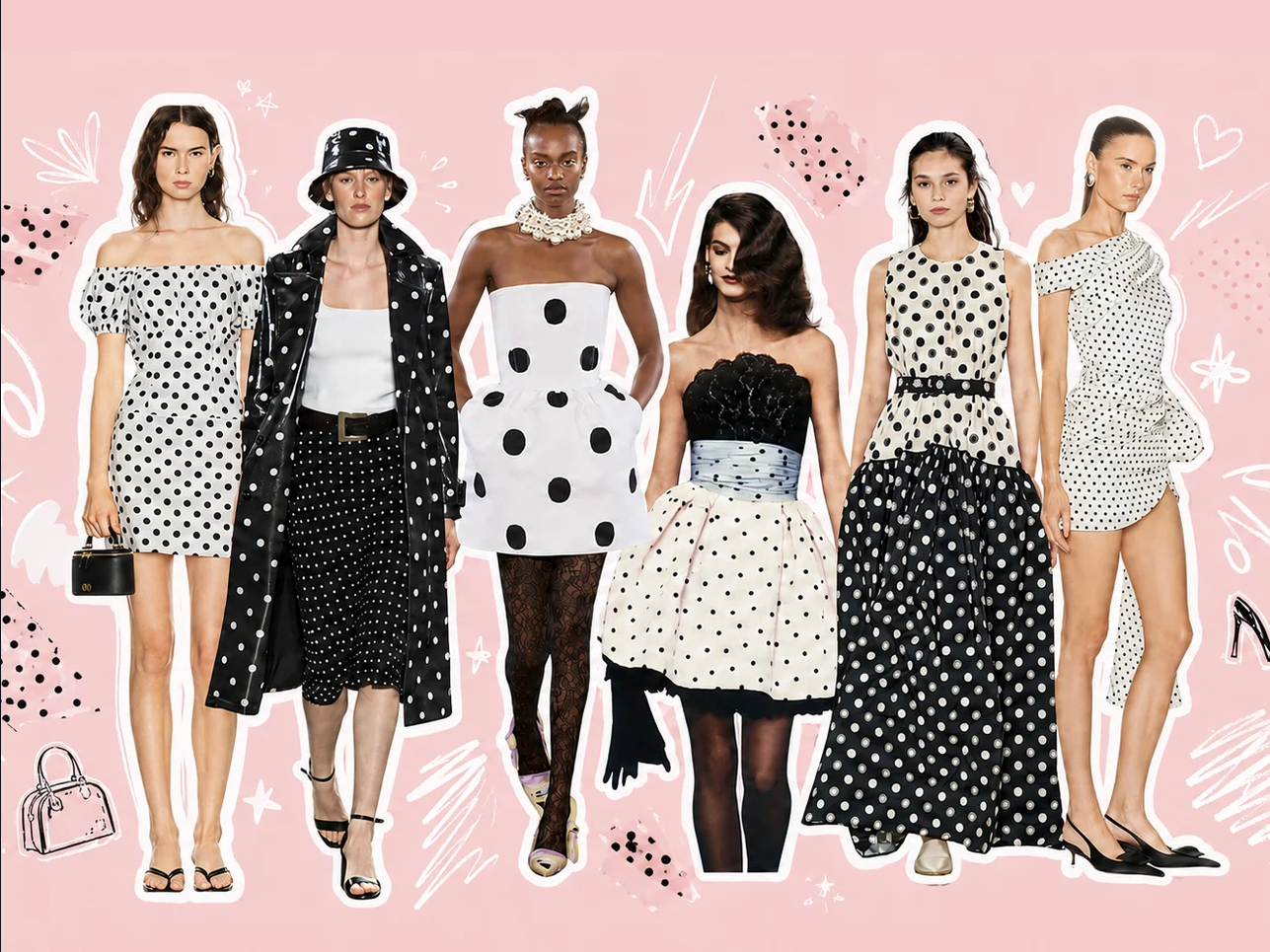
Polka dots have a reputation for being cheerful.
They appear on summer dresses, vintage-inspired skirts, and beachwear collections. They remind us of old Hollywood glamour, pin-up fashion, and the effortless elegance of women like Princess Diana and Julia Roberts in Pretty Woman. Few patterns feel as playful, timeless, and universally loved.
Yet their history is far less charming than their modern image suggests.
Long before polka dots became a fashion staple, spots and dotted patterns were associated with disease, uncertainty, and even fear. During the Middle Ages, people lacked the scientific understanding to explain illnesses such as smallpox, measles, and the plague. The visible symptoms of these diseases often appeared as spots on the skin, causing irregular dot-like patterns to become associated with sickness and contamination.
As a result, spotted fabrics were not considered attractive. In fact, many people viewed them with suspicion. Patterns that appeared random or uneven were unsettling because they reminded people of disease, imperfection, and disorder. While today's fashion industry celebrates individuality and eccentricity, earlier societies often valued symmetry and predictability, making dotted patterns particularly undesirable.
So how did polka dots transform from something feared into something fashionable?
The answer lies in both technology and culture.
By the nineteenth century, advances in textile manufacturing made it possible to produce evenly spaced dots on fabric. At the same time, Europe experienced a growing fascination with dance, music, and entertainment. One dance in particular—the polka—became wildly popular across the continent and later in the United States. Although the exact connection between the dance and the pattern remains unclear, manufacturers began attaching the word "polka" to various products to capitalize on the trend. Before long, dotted fabrics became known as "polka dots," a name that has remained with us ever since.
The pattern truly entered the fashion mainstream during the twentieth century. Hollywood actresses embraced it, designers incorporated it into their collections, and the once-feared motif gradually became associated with femininity, confidence, and fun. What had once reminded people of disease now symbolized glamour.
Perhaps that transformation is what makes polka dots so fascinating.
Fashion has always had a remarkable ability to rewrite meaning. Items once associated with workwear become luxury pieces. Trends that were mocked in one decade become desirable in the next. Even something as simple as a pattern can undergo a complete reinvention, shedding its original associations and acquiring entirely new ones.
Today, when we wear polka dots, few of us think about medieval fears or outbreaks of disease. We think about summer dresses, elegant blouses, and timeless style. Yet hidden beneath the pattern's playful appearance is a reminder that fashion is rarely just about aesthetics. Every trend carries a story, and sometimes those stories are far darker—and far more interesting—than we imagine.
So the next time you reach for a polka-dot dress, remember that you're not just wearing a trend. You're wearing centuries of cultural transformation, proof that fashion has the power to turn even the most unlikely symbols into something beautiful.