Let's be honest.
If someone had handed you a bowl of bright green, slightly bitter, grassy powder ten years ago and told you that you would eventually pay €7 for it in a minimalist café while photographing it next to your laptop, would you have believed them?
Probably not.
And yet here we are.
Matcha is everywhere.
Iced matcha.
Strawberry matcha.
Vanilla matcha.
Coconut matcha.
Matcha with cold foam.
Matcha desserts.
Matcha skincare.
Matcha cafés.
There are matcha TikToks, matcha rankings, matcha recipes and people travelling across cities to find “the best” matcha.
The hashtag #matcha has accumulated millions of videos on TikTok, while the drink has moved from something relatively niche into a mainstream café staple.
And I don't think that's simply because everyone suddenly discovered that green tea tastes amazing.
Because matcha isn't just a drink anymore.
It has become a personality trait.
And that made me wonder:
Do we actually like matcha—or do we like what drinking matcha says about us?
Let's start with the uncomfortable possibility
Maybe you genuinely love matcha.
That's completely possible.
Maybe you like its earthy, slightly bitter taste.
Maybe you prefer it to coffee.
Maybe the caffeine feels better for you.
Maybe you enjoy making it at home.
Maybe you genuinely appreciate Japanese tea culture.
Or maybe you just like sitting in a beautiful café with a green drink in your hand.
Also completely valid.
The point isn't to expose you for secretly hating matcha.
The point is to ask whether taste is the only reason we consume it.
Because human beings have never consumed food and drink purely for nutritional purposes.
We eat to celebrate.
To belong.
To remember.
To impress.
To comfort ourselves.
To participate in culture.
And increasingly, to communicate who we are.
Matcha just happens to be a particularly photogenic example.
Matcha actually has a lot going for it
Before we accuse an entire generation of pretending to like green tea, let's give matcha its due.
Matcha is a powdered form of specially grown and processed green tea. Because you consume the powdered leaf rather than simply steeping the leaves and discarding them, matcha contains compounds including catechins, caffeine and L-theanine. Reviews of the scientific literature have identified antioxidant activity and potential cognitive and metabolic effects, although the strength of evidence varies and more human research is still needed for many of the claims circulating online.
So when someone tells you:
“Matcha has antioxidants.”
They're not making it up.
When someone says:
“It contains caffeine.”
Correct.
When someone says:
“It has L-theanine.”
Also correct.
Where things become questionable is when those facts get transformed into:
“Matcha gives you clean energy, prevents ageing, reduces stress, burns fat, detoxes your body and basically turns you into a healthier person.”
That's a different claim.
And this is one of the things I find most fascinating about wellness culture:
a small amount of scientific truth can become the foundation for a very large lifestyle story.
Matcha contains compounds associated with health.
Therefore, matcha becomes healthy.
Healthy becomes wellness.
Wellness becomes a lifestyle.
And suddenly, drinking an iced matcha at 10 a.m. says something about the kind of woman you are.
The colour is doing some serious work
Let's talk about the obvious.
It's green.
Very green.
And in the world of social media, that's incredibly useful.
Coffee is brown.
Tea can be beige.
Water is… water.
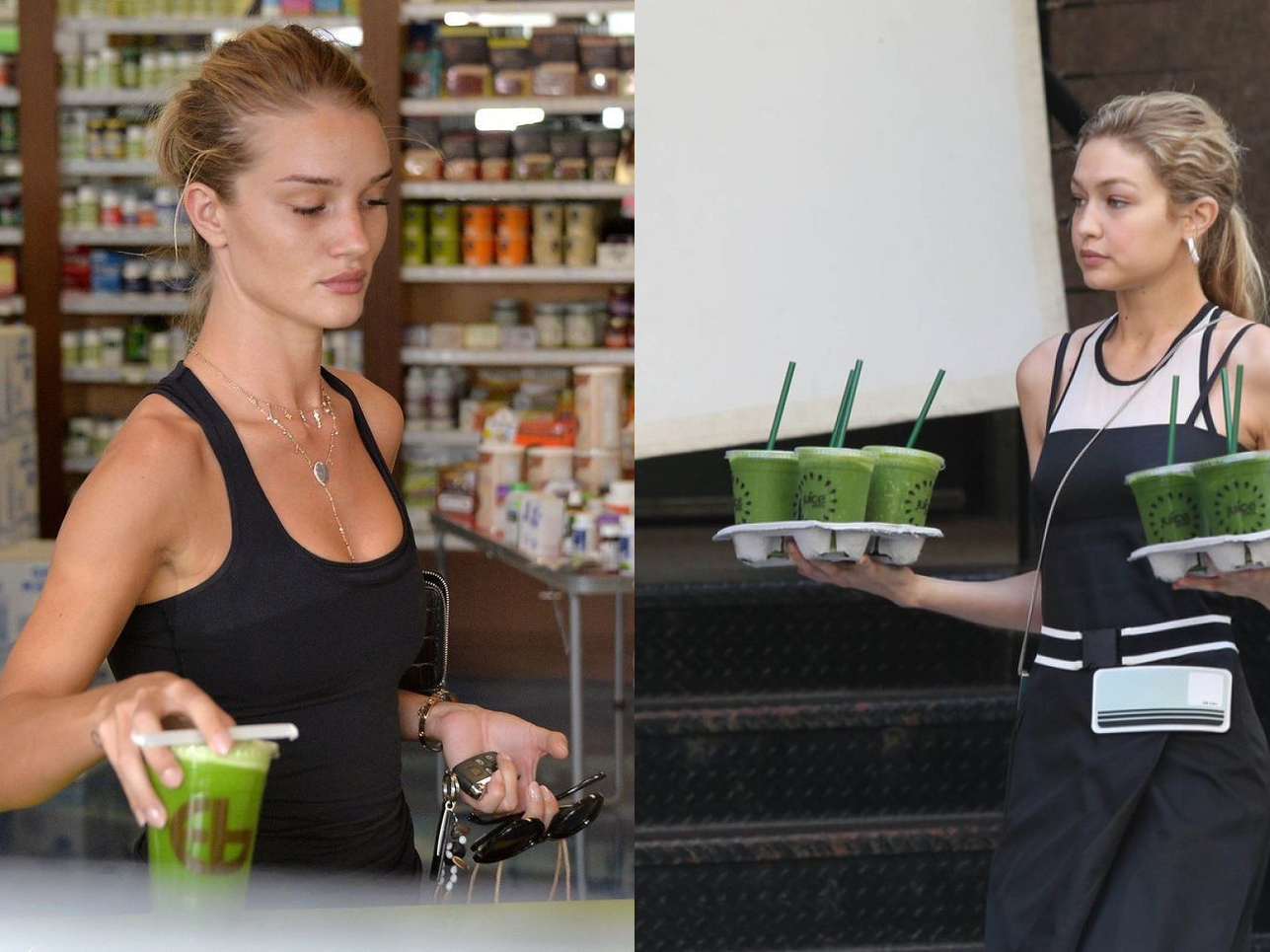
Matcha arrives looking like a visual effect.
Its colour photographs beautifully through a clear glass.
The layers are visible.
The milk swirls into the green.
The ice catches the light.
The powder can be whisked dramatically.
It looks good on a café table.
It looks good beside a laptop.
It looks good beside a book.
It looks good next to gold jewellery.
It looks good in a “day in my life” video.
It looks like wellness.
And this is not accidental.
Recent reporting on matcha's rise has repeatedly pointed to its vivid green appearance and social-media friendliness as part of its appeal.
Which raises an interesting question:
Would matcha have become quite this culturally powerful if it were beige?
Probably not.
The café matters almost as much as the drink
Here's where the story gets bigger than matcha.
Because when you buy a matcha from a specialty café, you aren't necessarily buying only a beverage.
You're buying an environment.
Maybe the café has pale wood.
A marble counter.
A minimalist menu.
Japanese ceramics.
Good lighting.
A beautifully designed logo.
A playlist that makes you feel like the protagonist of an indie film.
Maybe there is a queue.
Maybe the cups are recognisable.
Maybe everyone inside seems to be wearing the same general uniform of effortless cool.
And suddenly your €6 drink isn't just a drink.
It's an experience.
A setting.
A social environment.
A photograph.
A small piece of a lifestyle.
Recent research into specialty matcha cafés in Bangkok found that “Instagrammability” and social currency can influence consumption, with café aesthetics helping young professionals construct and communicate identities within their digital networks.
That is a very modern form of consumption.
You aren't only consuming the product.
You're consuming the context around the product.
And TikTok turned that context into a template
TikTok is very good at taking ordinary things and turning them into symbols.
A drink becomes an aesthetic.
An aesthetic becomes an identity.
An identity becomes a trend.
And then the trend becomes a market.
This is one reason matcha has travelled so quickly.
Someone films themselves whisking matcha in their kitchen.
Someone else shows their “morning matcha routine.”
Someone posts the best matcha cafés in London.
Someone ranks five matchas.
Someone says:
“If you know, you know.”
And suddenly the drink has cultural capital.
You don't just know what matcha tastes like.
You know where to get good matcha.
You know which cafés are cool.
You know which powder is considered high quality.
You know whether ceremonial grade is worth it.
You know what whisk to use.
You know the correct ratio.
You know the places that make it properly.
Knowledge itself becomes part of the identity.
And that is where matcha becomes much more interesting than a beverage.
Because taste can be learned
This is something we don't talk about enough.
Taste isn't entirely fixed.
Coffee is bitter.
Wine can be acidic.
Dark chocolate is bitter.
Olives can be intensely salty.
Blue cheese smells strange.
Many things we eventually describe as “delicious” are acquired tastes.
Matcha can be the same.
Your first matcha may taste like grass.
Your tenth may taste earthy.
Your twentieth might taste complex.
Eventually, you may genuinely love it.
But there is another possibility.
You may acquire the language of liking it before you acquire the taste.
You learn to describe it as:
Earthy.
Umami.
Creamy.
Ceremonial.
Complex.
Smooth.
You learn which cafés are “good.”
You learn which powders are “better.”
You learn how you're supposed to experience it.
And somewhere along the way, you start thinking:
Maybe I like this.
And perhaps you do.
But perhaps you're also learning to like what liking it says about you.
Because matcha has become a shorthand
What does a matcha drink communicate?
Potentially:
I'm health-conscious.
I'm wellness-oriented.
I'm young.
I'm in the know.
I have taste.
I care about quality.
I like beautiful things.
I'm not drinking three espressos because I'm stressed.
I'm having matcha because I have my life together.
Obviously, none of these things are objectively true.
A matcha drink doesn't tell us anything reliable about a person's character.
But symbols don't need to be objectively accurate to work.
That's the whole point of social signalling.
A handbag can signal wealth.
A watch can signal status.
A university can signal education.
A restaurant can signal taste.
And a matcha can signal a particular kind of modern, health-conscious, aesthetically literate identity.
One recent analysis of the digital matcha subculture explicitly describes matcha as being portrayed online as a symbol of health, beauty, social standing, modernity and belonging.
The drink has become a little piece of social language.
Which is why the €6 matcha can feel different from the €1 tea
Let's say both drinks contain caffeine.
One is a supermarket tea bag.
The other is a beautifully prepared iced matcha from a specialty café.
Obviously, they're not identical products.
The matcha may use better ingredients.
There is preparation involved.
The café has rent and staff.
The drink may genuinely taste better.
But you're also paying for something else.
You are buying an experience that has meaning.
And meaning has always been part of consumption.
The interesting part is that social media makes that meaning visible.
You can now show other people what you consumed.
That changes things.
Before Instagram, you could go to a beautiful café, drink something expensive and enjoy it.
Now you can also photograph it.
Post it.
Tag the café.
Put it into a “what I eat in a day” video.
Add it to your morning routine.
And suddenly your consumption becomes content.
The product isn't just consumed. It is performed.
This is where “performative matcha” comes from
The phrase sounds ridiculous.
But it describes something quite real.
In 2025, Forbes explored the idea of “performative matcha”: the way matcha has become a visual and cultural shorthand for taste, sensitivity, belonging and certain lifestyle identities online.
The important word isn't performative.
It's signalling.
We all signal.
Every day.
The clothes we wear.
The restaurants we visit.
The books we photograph.
The music we listen to.
The places we travel.
Even the way we decorate our homes.
None of this automatically makes us fake.
Human beings have always communicated identity through consumption.
What's different now is that social media gives us an enormous stage on which to perform it.
And matcha is almost perfectly designed for that stage
It has:
A recognisable colour.
A distinctive preparation ritual.
A long cultural history.
Health associations.
Premium versions.
Specialty cafés.
Beautiful packaging.
A visible preparation process.
A strong social-media presence.
And, importantly, a story.
It's not just green tea.
It's Japanese.
It's ceremonial.
It's wellness.
It's artisanal.
It's premium.
It's youthful.
It's aesthetic.
It's all of those things at once.
That is an extraordinarily powerful combination.
But there's something uncomfortable happening underneath the trend
The more matcha becomes fashionable, the more demand rises.
And when demand rises dramatically for a product with a limited agricultural supply chain, the consequences don't stay on TikTok.
In 2025, surging global demand contributed to shortages and significant price increases for Japanese matcha. ABC reported that Japanese producers were struggling to keep up with the unprecedented international demand, while The Guardian reported in August 2026 that wholesale prices for tencha — the leaves used to produce matcha — had risen sharply year-on-year.
That gives us another reason to look beyond the aesthetic.
Behind the cute glass is an agricultural product.
There are farmers.
Land.
Labour.
Weather.
Production constraints.
Tradition.
And a cultural history that existed long before TikTok decided the colour green was having a moment.
A 2025 academic analysis of international media coverage of matcha argued that the global trend is frequently framed around consumers, wellness and Gen Z while the labour, cultural and production realities behind the product receive much less attention.
That doesn't mean you shouldn't drink matcha.
It means you can be interested in the whole story.
So… do you actually like it?
Here's my favourite test.
Imagine your favourite café removes matcha from the menu tomorrow.
Would you:
A. Be genuinely disappointed because you love the taste?
B. Find another place that makes it?
C. Switch back to coffee without really caring?
D. Feel like something is missing from your morning routine?
E. Miss the entire ritual — the café, the cup, the walk, the photograph, the feeling — more than the drink itself?
There isn't a wrong answer.
And your answer might change depending on the day.
That's actually the point.
Because sometimes we like the thing.
Sometimes we like what the thing represents.
And often, we like both.
You don't have to choose between “authentic” and “performative”
This is where I think discussions about trends become unnecessarily moralistic.
Someone will inevitably say:
“People only drink matcha because it's trendy.”
And someone else will respond:
“No, I genuinely love matcha.”
Why do we have to choose?
You can genuinely enjoy matcha and enjoy the fact that it fits your aesthetic.
You can like the taste and like the café.
You can appreciate Japanese tea culture and enjoy posting your drink.
You can buy something because it's delicious and because it makes you feel like the version of yourself you want to be.
Those motivations aren't mutually exclusive.
The problem isn't signalling.
The problem is not knowing that you're doing it.
There's nothing wrong with wanting the lifestyle
This might be the most important distinction.
Maybe you don't just want matcha.
Maybe you want the morning ritual.
You want to wake up earlier.
Walk somewhere nice.
Buy your drink.
Sit down.
Read.
Work.
Feel calm.
Feel healthy.
Feel like your life is slightly more put together.
That's not stupid.
In fact, rituals can genuinely make our lives feel more intentional.
But ask yourself whether you need the product to create the identity.
Because perhaps you don't need to buy a €7 drink to become the woman who wakes up early and takes care of herself.
Maybe you can become her without the drink.
And if you still want the matcha?
Buy it.
Enjoy it.
Take the photo.
Just know what you're buying.
This is the difference between consumption and intentional consumption
Unexamined consumption sounds like:
“Everyone is drinking matcha, so I should try it.”
Intentional consumption sounds like:
“Everyone is drinking matcha. I'm curious why. I'll try it, and I'll decide whether I actually like it.”
The first gives your opinion to the trend.
The second lets you use the trend as information.
That is a very different relationship with culture.
And it applies far beyond matcha.
Do you actually like quiet luxury?
Or do you like what it communicates?
Do you actually want the designer bag?
Or do you want what owning it represents?
Do you genuinely love Pilates?
Or do you love the identity associated with being a Pilates girl?
Do you want the career?
Or do you want the status attached to it?
Do you like the restaurant?
Or do you like being the kind of person who goes there?
These are uncomfortable questions.
But they're useful ones.
The JOPI answer isn't “stop drinking matcha”
Obviously.
The JOPI answer is much less dramatic.
Pay attention.
If you love matcha, love it.
If you hate matcha, you don't need to acquire the taste just because your TikTok feed has decided it's sophisticated.
If you like the café more than the drink, that's okay too.
If you love the aesthetic, admit that.
If you like the health associations, learn what the evidence actually says.
If you're paying €7 because you enjoy the ritual, understand that you're buying an experience — not just powdered tea.
And if you eventually discover that you don't actually like matcha?
You are allowed to stop.
Even if everyone else is still holding the green cup.
The JOPI question
Maybe the most interesting thing about matcha isn't whether it tastes good.
It's that we have turned a beverage into a tiny piece of identity.
And maybe that's not a bad thing.
Culture has always done this.
The danger is simply forgetting that the symbol isn't the same thing as the self.
You don't become healthier because you hold a green drink.
You don't become sophisticated because you know which café serves the best one.
You don't become interesting because your morning routine looks good on TikTok.
And you certainly don't become less intelligent because you enjoy a trend.
The intelligent response isn't to reject the trend.
It's to understand why you want it.
So the next time you're standing in line for your iced matcha, ask yourself:
Do I actually like the taste?
Then ask the more interesting question:
Would I still want this if nobody could see me drinking it?
And if the answer is yes?
Enjoy your matcha.
If the answer is no?
That's interesting too.
Because perhaps what you wanted wasn't really the drink.
Perhaps you wanted the version of yourself that came with it.
And honestly?
That's worth knowing.
But why?